
Support quality, independent, local journalism…that matters
From just £1 a month you can help fund our work – and use our website without adverts. Become a member today
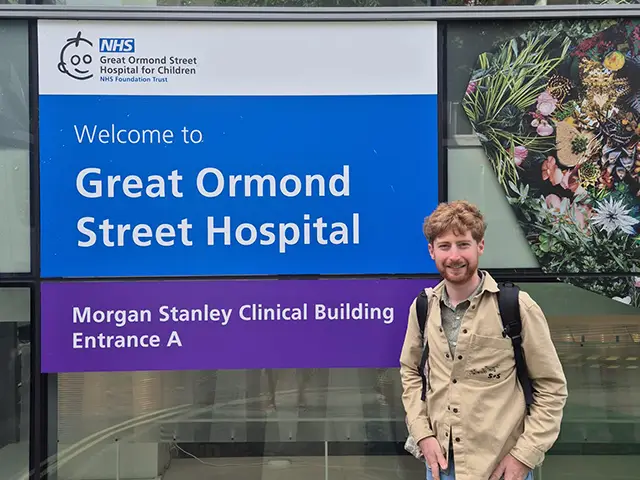
A man from Nelson has marked 25 years since becoming the first patient in the UK to receive pioneering gene therapy as a baby.
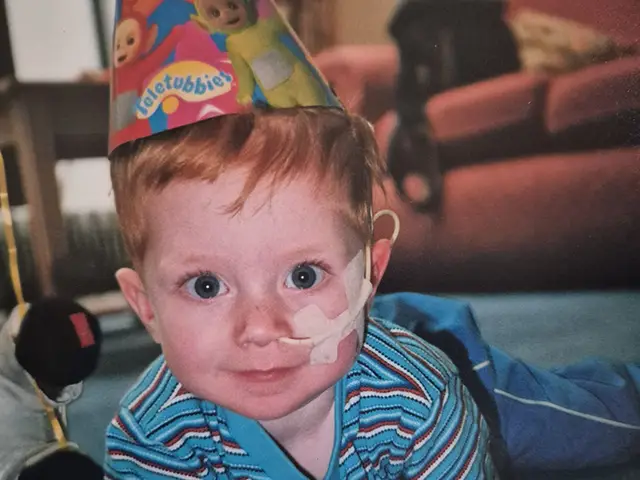
Rhys Evans was just aged just one when he was treated at Great Ormond Street Hospital (GOSH) for Severe Combined Immunodeficiency (SCID). The rare genetic condition leaves infants without a functioning immune system, leaving them unable to fight off everyday infections.
Without treatment, babies born with SCID rarely live past their second birthday. At the time, the only available option was a bone marrow transplant.
In 2001, clinicians at GOSH and University College London offered Rhys’ family an experimental treatment that inserted a working copy of the faulty gene back into his own cells. Within weeks of the procedure, his body began developing its own immune system.
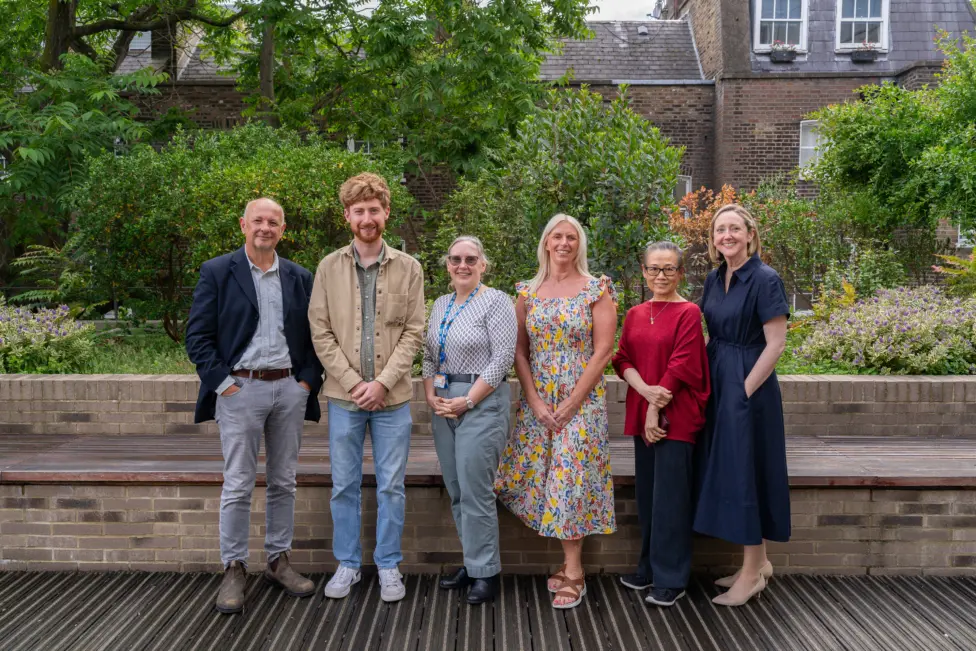
Now aged 25 and living in Minehead, Rhys attended a special anniversary event at the hospital alongside his parents to meet the clinical team who treated him.
He said: “I wouldn’t be here without the treatment I received at GOSH. Growing up, I’ve been able to live a normal life, go to school and university, see friends, and plan for the future – things my family once couldn’t take for granted.
“It’s incredible to see how 25 years on, gene therapy has helped so many children like me.”
Kimberly Gilmour, who processed Rhys’ cells in 2001 and now serves as chief of laboratory medicine at the hospital, recalled the uncertainty surrounding the trial.
“Before Rhys, we had never worked with fresh cells before, so it was quite daunting,” she said. “His parents were in the office watching us through the glass into the lab. We took the cells to the ward to Rhys, and we didn’t know if this would be a cure. We were delighted that he did so well.”
Since Rhys’ historic treatment, the hospital has delivered 35 different cell and gene therapies to more than 135 children with rare conditions, with an increasing number of treatments now available on the NHS.
Support quality, independent, local journalism…that matters
From just £1 a month you can help fund our work – and use our website without adverts.
Become a member today