
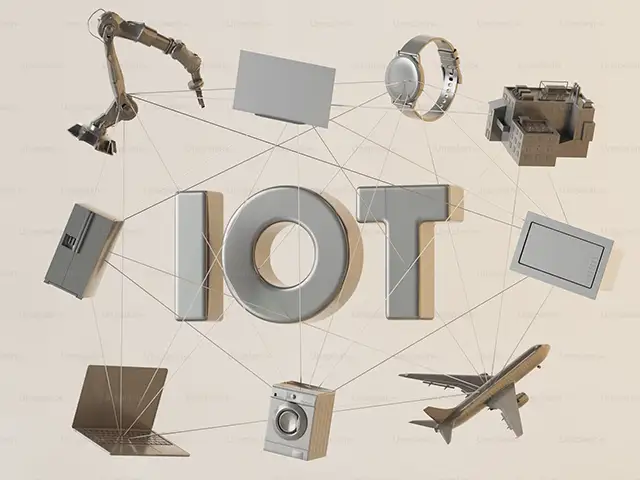
The Internet of Things (IoT) is reshaping daily life by connecting homes, workplaces, and public spaces. From smart homes that adapt to routines to wearable health trackers, IoT enhances convenience, security, and efficiency while raising privacy concerns. Its growing influence spans industries, transforming how people live, work, and entertain themselves.
IoT at Home: Smarter and More Efficient
IoT is making homes more responsive. Smart thermostats cut energy waste, security cameras offer remote monitoring, and voice assistants control lighting, music, and appliances. Even chores are automated with smart vacuums and IoT-enabled washing machines, creating a more convenient and secure living environment.
IoT in Entertainment: Enhancing How We Experience Content
The entertainment industry has fully embraced IoT, transforming how content is consumed and personalised. Streaming platforms like Netflix and Spotify now use IoT-driven algorithms to offer tailored recommendations, while smart TVs and IoT-enabled sound systems enhance immersion. Cloud gaming also allows high-quality play without the need for expensive hardware, and VR/AR technologies take gaming, concerts, and live events to the next level.
Casinos are similarly leveraging IoT technology to enhance the overall experience for their players. Smart gaming tables monitor activity, security systems bolster safety, and mobile apps deliver personalised promotions and services. In the UK, a growing number of players are seeking out casinos not on GamStop (the nation’s gambling self-exclusion program). According to gambling expert Noah Evans, these platforms often provide a smoother mobile experience, quicker payouts, a broader range of payment methods, and larger game libraries. Furthermore, they tend to offer more flexible bonus options, such as welcome offers, free spins, cashback, and VIP rewards, which may attract players looking for additional incentives. Whether in online or physical environments, IoT is transforming how experiences are tailored and improved. Whether in digital entertainment or physical venues, IoT is revolutionising the way experiences are personalised and enhanced.
IoT in Healthcare: Improving Wellness and Patient Care
IoT is making healthcare more accessible and efficient. Wearable health trackers monitor heart rate, sleep patterns, and activity levels, giving individuals greater control over their well-being. Remote patient monitoring allows doctors to track patients’ health conditions without requiring frequent hospital visits. Smart pill dispensers help with medication adherence, ensuring timely doses. Hospitals use IoT to manage patient records, optimise equipment usage, and assist in robotic surgeries. By enabling real-time data collection and predictive analytics, IoT is helping to improve healthcare outcomes and shift toward preventive care.
IoT in Workplaces and Cities: Increasing Efficiency and Safety
IoT is optimising workplaces by improving productivity and resource management. Smart office systems adjust lighting and temperature based on occupancy, reducing energy costs. IoT-powered security systems monitor office spaces, preventing unauthorised access. Businesses use IoT to track inventory, manage supply chains, and enhance workflow automation.
Beyond offices, IoT is shaping smart cities. IoT-powered traffic lights adapt to real-time traffic patterns, reducing congestion. Public surveillance systems enhance safety, while smart sensors monitor air quality and waste management. IoT is playing a growing role in urban development, making cities more sustainable and efficient.
Security and Privacy: The Risks of a Connected World
As IoT expands, so do concerns about security and privacy. More connected devices mean more potential entry points for cyberattacks. Hackers can exploit vulnerabilities in smart home systems, gain access to personal data, or disrupt essential services. IoT devices often collect vast amounts of user data, raising concerns about unauthorised tracking and data breaches. Stronger encryption, regular software updates, and user awareness are essential for protecting privacy and securing connected devices. Companies and policymakers must work together to set higher security standards for IoT.
The Future of IoT: A More Connected World
Advancements in AI, 5G, and edge computing are shaping the future of IoT. AI-powered IoT will make devices smarter, learning from user behavior to improve efficiency. 5G will enhance connectivity, allowing for faster and more reliable communication between devices. Edge computing will process data closer to the source, reducing delays and making real-time applications more efficient. As IoT continues to evolve, its influence on daily life will only grow, offering smarter solutions for homes, workplaces, healthcare, and entertainment.
Conclusion
The Internet of Things is deeply embedded in everyday life, making homes smarter, entertainment more immersive, healthcare more accessible, and workplaces more efficient. However, as connectivity increases, so do challenges related to security and privacy. Addressing these concerns is essential for ensuring a safer and more sustainable IoT future. As technology advances, IoT will continue to shape daily experiences, bringing greater convenience and efficiency while redefining how people interact with the digital world.