
Support quality, independent, local journalism…that matters
From just £1 a month you can help fund our work – and use our website without adverts. Become a member today
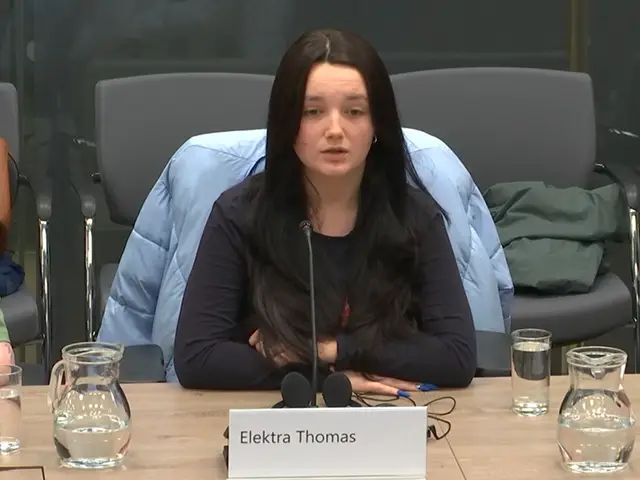
A teenage carer sat a GCSE exam only hours after getting home from a hospital at 3am following a family emergency, a Senedd committee has heard.
The warning came as witnesses highlighted a “sink-or-swim” reality where children as young as three are taking on caring roles while feeling invisible to schools and social services.
Elektra Thomas, 15, who cares for her autistic, non-verbal brother and her epileptic sister, was part of a remarkable and articulate trio of teenagers who gave evidence to a new health committee inquiry on access to support for unpaid carers today (December 4).
The teenager helps her brother Blake get ready for school in the morning and helps him communicate by acting as his voice, which she has done since about three years old.
Ms Thomas told Senedd Members her sister has two children, “so I’m either handling her having a seizure, running around with her medication… or I’m looking after her kids”.
‘I can’t focus on myself’
She said: “I’ve been having school assessments at the same time she’s had a seizure. I’ve been in ambulances waiting for her to get into a hospital while also studying.”
Ms Thomas explained how she is unable to focus on her schoolwork if her brother has had an overwhelming day. “I can’t focus on myself and I don’t have time for myself,” she said.
The teenager, who is from Carmarthenshire, described how she was once in hospital until 3am then sat a test – which went towards her GCSE grades – that same day.
Ms Thomas warned young carers do not have time to manage their own mental health, saying: “I didn’t have time for myself, I had time for my brother and sister and that was it.”
She said: “As a young carer who wasn’t noticed for a decade, it was pure manic: I had no coping skills, I had no support – and this has been going on since I was about three or four.”
‘Running on empty’
Ffiôn-Hâf Scott, 18, from Wrexham, who is working while studying in sixth form, has similarly been a carer since she was four years old.
“I used to care for my mum and my sister,” she told the committee. “My sister used to be in a psychiatric ward, she was there for seven years.
“And I care for my mum because she’s diabetic, classed as disabled, has a long list of mental health issues, she has in the past suffered a stroke and had cancer.
“I don’t know how she’s still standing.”
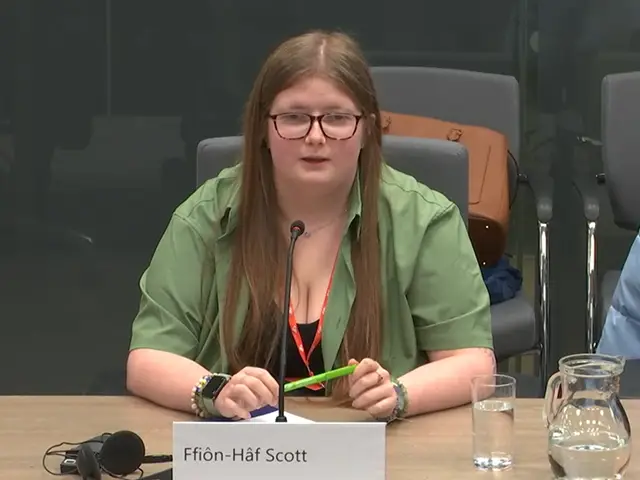
Ms Scott said: “The main challenge right now is looking after myself and learning that you actually have to keep yourself afloat… to keep looking after someone else.
“I think for a very long time I ran on nothing because of my caring role or I didn’t think about the things I needed to do for me, so respite and things like that.”
‘It’s not a choice’
The Welsh Youth Parliament member warned a lack of support for young carers has been normalised, saying she has had to explain herself 70 different times while aged 12.
Ms Scott said: “I remember going to my teacher and saying – we had a piece of coursework – look I can’t do this right now… you’re going to have to fail me…
“Their response was just ‘well, you have too much on your plate and you need to take things off your plate’ and I was like: it’s very bold of you to stand where you’re stood and say that to me because it’s not a choice to take on the things that we do take on.”
She recalled receiving a phone call about her mum collapsing moments before a maths test and expressed concerns about the prospect of mobiles being banned in schools.
Albie Sutton, 16, a young carer from north Wales, looks after his disabled mother by doing things such as cleaning the house, budgeting and cooking for the family every day.
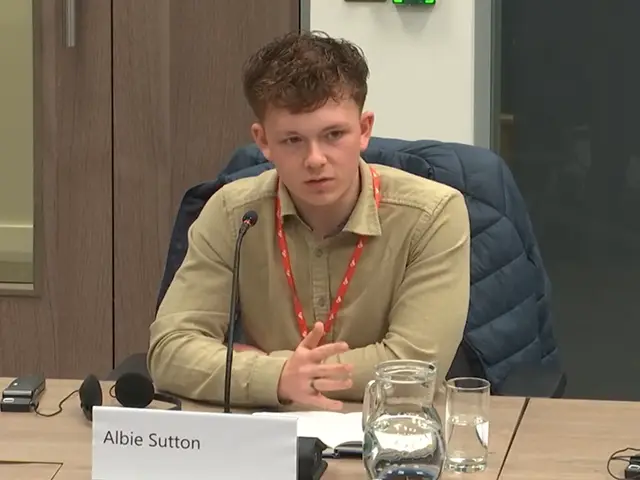
Mr Sutton said: “It’s a real struggle for her to move around the house, to even do stuff like getting dressed or moving to the toilet by herself… so I’ve got to help her.”
‘Mental toll’
The teenager estimated his caring role takes up about 25 hours a week and makes it difficult for him to pursue some of his hobbies such as competing in powerlifting.
“My mind feels like a hive of bees,” he said. “There’s so many things going in and out… I get home at the end of the day and I’m like ‘oh my God, I’ve got to do this, I’ve got to do that’.”
Warning of the mental stress, he added: “It’s also really difficult for me to socialise… I feel very isolated in my caring role, especially at home. I’m always housebound, I never get the opportunity even just to go out in my local town.”
Mr Sutton told Senedd Members it plays on his mind that his younger brother may have to take on responsibility. “It’s got me debating whether I can go to university,” he said.
He called for a Wales-wide campaign to raise awareness among educators and employers of the issues young carers face and how to recognise the signs.
Ms Thomas agreed: “I’ve had multiple teachers look at me and go ‘what’s a young carer, sorry?’. I’ve had pharmacists go ‘are you sure you’re a young carer?’ and it baffles me.”
Support quality, independent, local journalism…that matters
From just £1 a month you can help fund our work – and use our website without adverts.
Become a member today