
Support quality, independent, local journalism…that matters
From just £1 a month you can help fund our work – and use our website without adverts. Become a member today

The Welsh Government has escalated intervention at Aneurin Bevan University Health Board to one step short of special measures, amid concerns about an £18m deficit and A&E failures.
Jeremy Miles, Wales’ health secretary, announced the Gwent health board will move to level four for finance and emergency care on the government’s five-point scale.
In an update on escalation at each NHS organisation in Wales, Mr Miles warned the health board’s financial position has “deteriorated rapidly” over the past year.
“It is forecasting an £18.3m deficit by the end of March. This is not acceptable,” he said, announcing he will revoke approval of the health board’s three-year plan.
Mr Miles said the health board had been at level three due to concerns about emergency care at the Grange hospital in Cwmbran but will move to level four.
‘Failed’
He told the Senedd: “The health board has failed to deliver the required improvements… This will result in direct intervention by the Welsh Government… to improve the timeliness and quality of urgent and emergency care for people living in the Gwent region.”
Mr Miles announced Betsi Cadwaladr Health Board, in north Wales, would remain at level five or special measures. He pointed to interventions including a review of planned care, cancer and emergency services as well as an investigation into management of waiting times data.
But he raised “considerable” progress on governance and leadership at Hywel Dda Health Board following the appointment of a new chair and chief executive.
He announced Hywel Dda will be de-escalated to routine, level-one arrangements for governance and leadership. However, the west-Wales health board remains at level three for planned care and cancer as well as level four for finance and A&E performance.
He told Senedd members he was appointing a “senior turnaround director” to provide support to Cardiff and Vale Health Board, which was placed into level four in July.
‘Turnaround’
Mr Miles said the escalation levels of Cwm Taf Morgannwg, Swansea Bay and Powys health boards, as well as other NHS bodies such as the ambulance services trust, will not change. All seven health boards in Wales remain in some form of escalated status.
In today’s (December 16) statement, Mr Miles said long waits are falling as he pointed to a 43% reduction in lost ambulance hours since the last six-monthly update in July.
But James Evans, the Conservatives’ shadow health secretary, questioned whether intervention is delivering meaningful improvements for patients and staff.
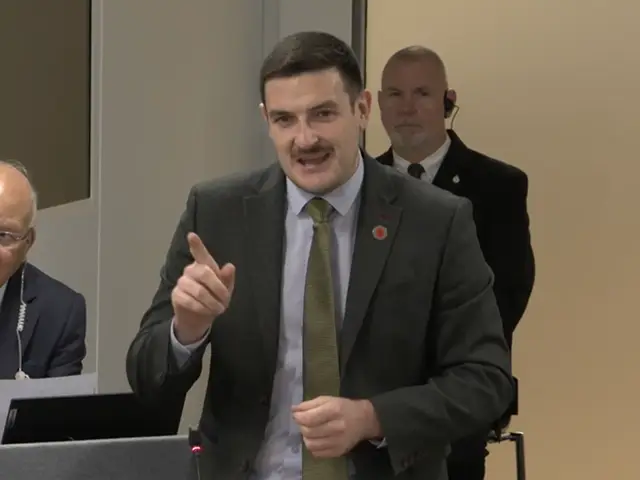
Pointing out that Betsi Cadwaladr Health Board has been “trapped” in special measures for most of the past decade, he told the Senedd: “It is deeply concerning that, once again, we see multiple health boards at levels four and five.”
Mr Evans urged ministers to publish performance metrics, risk assessments and evidence used to assign escalation levels to enable decisions to be properly scrutinised.
‘Systemic’
He warned focusing on local financial mismanagement of health boards risks ignoring wider, systemic challenges driven by the Welsh Government’s policy and funding decisions.
Plaid Cymru’s Mabon ap Gwynfor agreed with his Tory counterpart about “deeper and more systemic” failures becoming a “constant feature” of the government’s record.
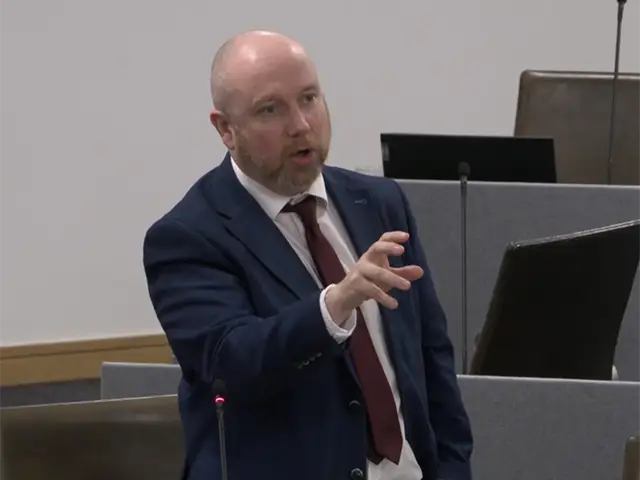
“Measures that should be exceptional, temporary and used only as a last resort have instead become routine,” he said. “It is the people of Wales who are paying the price for that failure.”
The Plaid health spokesperson said Betsi Cadwaladr Health Board has come to “embody the Welsh Government’s failure to embed lasting performance improvement”.
Mr ap Gwynfor told the Senedd: “This situation suggests one of two things: either the special measures system itself is not working or there’s no ceiling to Labour’s mismanagement.”
Mr Miles emphasised that escalation is about supporting health boards, not punishing them. The health secretary also pointed to challenges in other parts of the UK, with 12 of the 14 health boards in Scotland also in escalation.
‘Damning indictment’

Speaking ahead of the Senedd debate, South Wales East MS Natasha Asghar said: “This serious intervention is a damning indictment of Labour’s track record when it comes to the health service here in Wales and it is my constituents who are paying the price.
The Conservative MS continued: “Our dedicated NHS staff go above and beyond day in, day out, often under unimaginable pressure, but they are being let down by the chaos and mismanagement from the Labour Welsh Government.
“The problems within our health service have been known for quite some time, yet it appears Labour politicians in the Senedd are either reluctant or totally incapable of doing anything to fix the system.
“The Welsh Government must now finally declare a health emergency and focus all efforts on improving outcomes for patients, driving down shamefully high waiting lists, and turning our health service around.”
Support quality, independent, local journalism…that matters
From just £1 a month you can help fund our work – and use our website without adverts.
Become a member today