
Support quality, independent, local journalism…that matters
From just £1 a month you can help fund our work – and use our website without adverts. Become a member today

Gwent’s NHS board still hasn’t been told what it needs to do to improve, seven weeks after the Welsh Government moved it towards special measures.
Wales’ health secretary, Jeremy Miles, announced in mid December he was escalating intervention at the Aneurin Bevan University Health Board due to its “rapidly” deteriorating financial position – and a “failure to deliver” improvements to emergency care at the Grange Hospital in Cwmbran.
At the board’s January meeting, its director of strategy Hannah Evans told members she is still waiting for guidance on what needs to be done to “de-escalate” and move down the intervention levels. The December decision moved the board from level three “enhanced monitoring” to level four “targeted intervention” – which is one down from “special measures”.
Why is Caerphilly in Gwent?
Caerphilly County Borough was formed on April 1, 1996, by the merger of the Rhymney Valley district of Mid Glamorgan with the Islwyn borough of Gwent.
Administratively, for local services such as the police and health, the borough now falls under a wider region referred to as Gwent. This comprises the council areas of Caerphilly, Newport, Torfaen, Blaenau Gwent and Monmouthshire.
She said: “We haven’t yet received the de-escalation framework that sets out the measures and expectations of improvement to de-escalate services.
“It’s really important to us as a board to check against, and that we are doing the right things, and is important for us to plan for next year and to factor into our plans.”
Ms Evans said she had attended a meeting to discuss the plans last week and was told the framework would be received – but at the board’s meeting on Wednesday January 28, she said: “I chased it up again this morning and it’s not been received as yet.”
Ambulance handover times improved in September and October, with fewer crew hours lost, but there was a deterioration in November with a further increase in lost crew hours in December. Overall results remain better than the 2024/25 performance.
Waits longer than 12 hours have reduced for four straight months, and are lower than last year, but were short of the de-escalation requirement. The report said it should be seen in the context of “significant winter pressures” putting extra strain on the hospital.
Board member Penny Jones asked if the extension to the Grange emergency department, which opened in December, had relieved pressures.
Ms Evans said it is yet to be fully evaluated and described the extension as “not just a waiting room” – and said it has allowed the board to test how additional assessment spaces can be used. She also said it has paused phase two of the extension to take account of how the new area is working.
Leanne Watkins, the chief operating officer, said the extension had “definitely been a benefit” including when the board declared a critical incident earlier in January.
Board member Dafydd Vaughan said he took issue with the Welsh Government describing its finances as “rapidly deteriorating”. He said the board had been clear its “balanced” financial plan carried a financial risk.
He said he disputed it was a “rapid deterioration” as the risk had been flagged by the board: “Was there any sense from the Welsh Government how they missed that?”
Chief finance officer Robert Holcombe said: “I was quite surprised to see that narrative, that was pointed out throughout the year.”
Chair Ann Lloyd, who said Aneurin Bevan receives the second lowest funding per head of population of Wales’ seven health boards, added the risk had been noted at the meeting with the Welsh Government: “It was acknowledged at the public accountability meeting there was a £25m risk attached to our plan.”
Chief executive Nicola Prygodzicz said with “hindsight” the board should probably have remained at intervention level four when it presented the balanced financial plan in July rather than being de-escalated, and said she had shared that feedback with the Welsh Government.
On the escalation related to emergency care, Ms Prygodzicz said she believed delayed ambulance handovers was a “big driver” – but said there had still been a “big improvement” on the previous year. She said lost hours in December and January were around 3,000 a month compared to 4,500 the previous year.
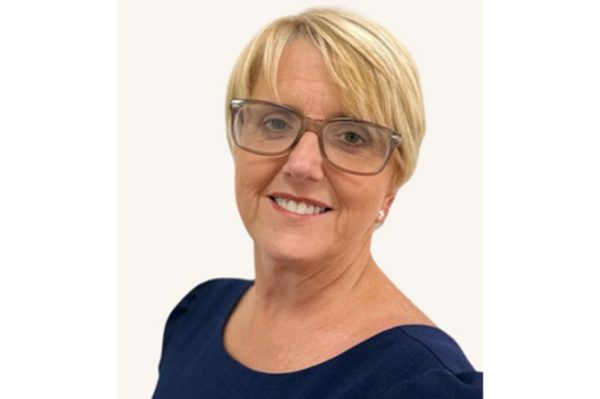
But she explained: “A number of other health boards made some really good improvements and we were slower in reacting to that, that’s probably been a big factor.”
She also said she expects more frequent scrutiny of performance in meetings with the Welsh Government and said she believes officials intend to be “clearer” in what they mean by intervention providing support to health boards.
Ms Evans said the measures the board needs to improve on are included in the regular board reports, as well as being discussed on a daily and weekly basis by senior managers.
Support quality, independent, local journalism…that matters
From just £1 a month you can help fund our work – and use our website without adverts.
Become a member today