
Support quality, independent, local journalism…that matters
From just £1 a month you can help fund our work – and use our website without adverts. Become a member today
By Nye Davies, Cardiff University
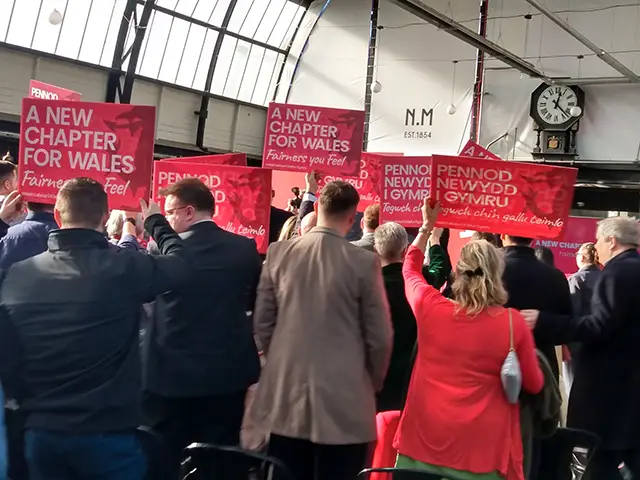
May 7 will go down as the worst election in the history of Welsh Labour. More than a century of electoral dominance ended with the party sitting in opposition in the Senedd for the first time.
Given Welsh Labour’s once-hegemonic position, the scale of the defeat is astonishing. This was not simply a loss, but a collapse. The party now holds just nine seats in the Senedd, with few new figures emerging to shape its future direction.
The unavoidable question is where Welsh Labour goes from here, and whether it can recover.
The answer depends not simply on new policies or a change of leader, but on whether the party is capable of a genuine reckoning with both its ideological direction and the consequences of nearly three decades in government. That process will be difficult while Welsh Labour remains divided between its Westminster wing in London and its devolved leadership in Cardiff Bay.
Adaptation and exhaustion
No party in the democratic world has enjoyed such sustained dominance as Labour in Wales. As the political scientist T.J. Pempel has argued, dominant parties survive by remaining flexible and evolving into broad “catch-all” movements capable of appealing to diverse groups of voters.
For years, Welsh Labour did just that. The party normalised a form of progressive Welsh identity politics that stopped short of supporting independence, while reshaping debates around devolution, national identity and governance. In doing so, it assembled a broad coalition of centre-left and Welsh-identifying voters.
Yet the political terrain Welsh Labour helped create has also exposed its vulnerabilities. Having pushed this soft nationalist positioning as far as it could, tensions with the UK Labour party has weakened Welsh Labour’s ability to sustain a convincing message about “standing up for Wales”.
And having made those ideas politically mainstream, the party now struggles to present itself as their most credible champion. Plaid Cymru has increasingly occupied the political space Welsh Labour once helped define.
At the same time, the wider UK Labour party under Prime Minister Keir Starmer has struggled to respond effectively to the rise of Reform UK. Its rightward shift on issues such as immigration, combined with a broader lack of ideological clarity, has alienated some progressive voters and encouraged others to look elsewhere on the left.
This has left Welsh Labour politically squeezed. Its rhetoric about “standing up for Wales” increasingly rings hollow, while Plaid Cymru advances a left-leaning platform explicitly framed around Welsh interests and greater autonomy from Westminster. For many voters, the question has become: what is the point of Welsh Labour?
Learning to lose
Defeat, however, need not be fatal.
Dominant parties elsewhere, such as the Liberal Democratic Party in Japan, have recovered by learning to lose and realigning with new political realities. But such renewal requires leadership, ideas, and organisational coherence. Welsh Labour currently lacks all three.

Dominance has hollowed out and inhibited the party’s intellectual capacity. Former First Minister Mark Drakeford arguably shaped Welsh Labour’s political identity throughout much of the devolution era. But his retirement has left a vacuum, with no obvious successor providing ideological direction.
The party can also no longer rely on claims of administrative competence and delivery after voters rejected that argument at the ballot box. Incumbency became a burden.
These weaknesses are compounded by the lack of fresh voices in the Senedd group. With Ken Skates installed as interim leader, the party currently offers continuity at precisely the moment reinvention is needed. It illustrates how decades of dominance narrowed, rather than renewed, the pool of credible alternatives.
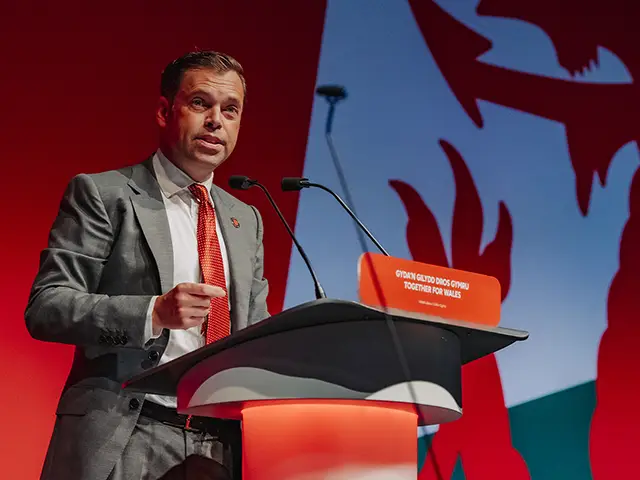
More damaging is the intensifying internal conflict within Welsh Labour. In the aftermath of defeat, long-running tensions between Labour politicians in Cardiff Bay and Westminster have become increasingly public.
Former Welsh Government minister Mick Antoniw described the defeat as having been “manufactured in Downing Street”. Meanwhile the UK Government’s secretary of state for Wales, Jo Stevens, has laid the blame at the door of the Welsh Government.
While the Welsh Government must accept responsibility for the failures of 27 years of government, Stevens’ post-mortem fails to mention Keir Starmer once. It is an incredible oversight considering the scale of his unpopularity.
The UK Government’s at-times-hostile attitude to further devolution – alongside disputes over rail funding linked to the HS2 project – have further eroded the perception that Labour stands up for Wales.
Far from offering a self-reflective post-mortem, Stevens’ intervention risks deepening, rather than resolving, Welsh Labour’s internal tensions.
An existential moment
This is Welsh Labour’s core dilemma. If it is to recover, it must undergo a period of serious reckoning with its record, its ideological direction and the consequences of dominance. But without resolving the tension between its Westminster and Welsh wings, that process appears unlikely.
Welsh and UK politics have changed dramatically. Nationalist parties now dominate the three devolved legislatures, and the Labour Party is in crisis. This reflects a wider shift in which Labour increasingly governs as an English party, with Welsh voices peripheral. For a party that has shaped Welsh politics for more than a century, this moment is existential.
Unless Welsh Labour confronts this reality and reconciles its divisions, learning to lose will be difficult. Defeat will not be a prelude to renewal, but the start of a more terminal decline.
Nye Davies, Lecturer in Politics, Cardiff University
This article is republished from The Conversation under a Creative Commons license. Read the original article.
Support quality, independent, local journalism…that matters
From just £1 a month you can help fund our work – and use our website without adverts.
Become a member today