
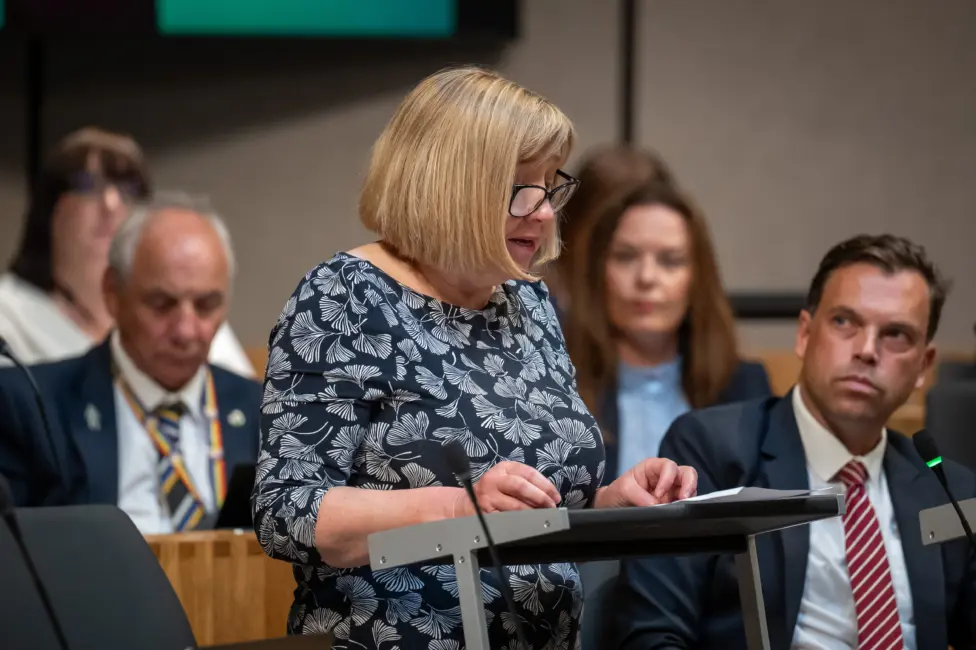
Calls for a new negotiating body for school support staff, and an end to term-time only pay, has been backed in the Senedd.
A motion, put forward by Labour’s education spokesperson Lynne Neagle, was supported by Senedd Members on Wednesday June 10.
Ms Neagle said support staff “build strong relationships with children and young people, which are crucial for their wellbeing, so that they can learn and reach their potential”.
Pointing to the fact support staff are now the majority of the school workforce in Wales, Ms Neagle said: “Our schools simply couldn’t function without them. They are quite simply the glue that holds our schools together.”
The Sir Fynwy Torfaen MS highlighted the extent of in-work poverty facing support staff, referencing a Unison survey of more than 1,400 school support staff showing 8% of support staff take home less than £1,000 a month.
Ms Neagle also described it as an equality issue, noting more than 90% of support staff are women.
Concluding her speech to the Siambr, Ms Neagle called on the Plaid Cymru government to commit to bringing forward new legislation and to end term-time only pay for school support staff – a pledge featured in the Labour election manifesto.
She said: “Our calls are supported by the Welsh trade union movement, including Unison Cymru and the GMB. But valuing school support staff is not just the right thing to do for the staff; it’s the right thing to do for our schools, our communities and every learner in Wales.”
“Tireless dedication”
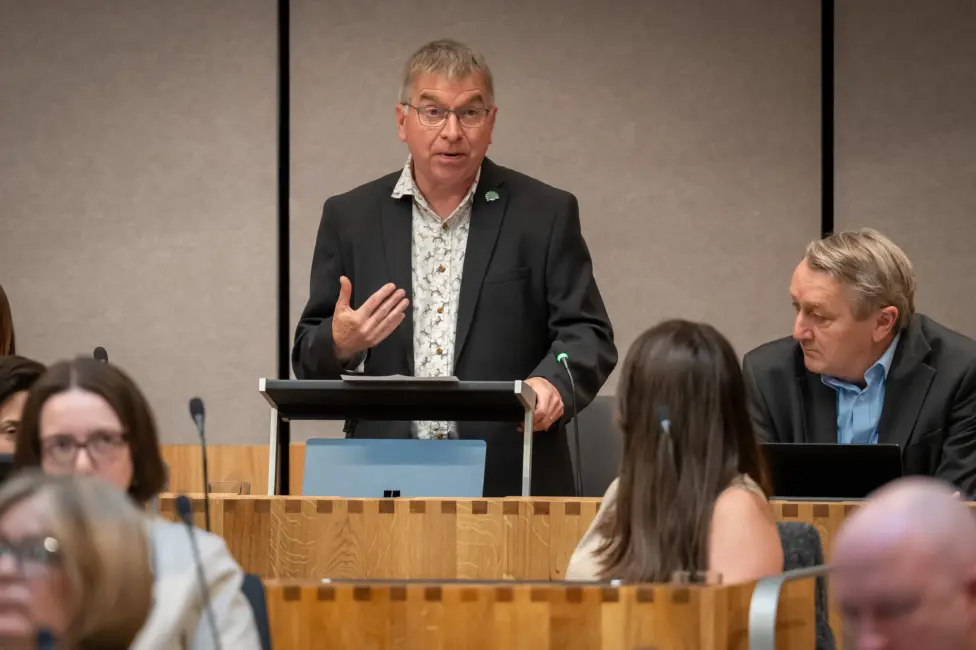
Paul Rock, Green Party MS for Caerdydd Fynnon Taf MS, supported the motion, and spoke of the “tireless dedication” provided by school support staff.
Mr Rock, whose wife works as a teaching assistant, said: “I don’t need to remind members of the important work that school support staff do: one-to-one interventions to support children with additional learning needs or children who are simply falling behind.
“They work with small groups, they cover for teachers and look after whole classes at a time, they run breakfast clubs and after-school clubs, they supervise children at lunch times and play times, they work unpaid overtime daily, and the pressures of the job mean they cannot always take the breaks they are entitled to.”
Mr Rock described this as an issue of “fairness, safety, and wellbeing” and said the lack of year-round pay is “directly contributing” to the gender pay gap in Wales.
He outlined his party’s commitment to treating school support staff fairly and ensuring they are “fully represented” in discussions about their pay.
“Sympathy”
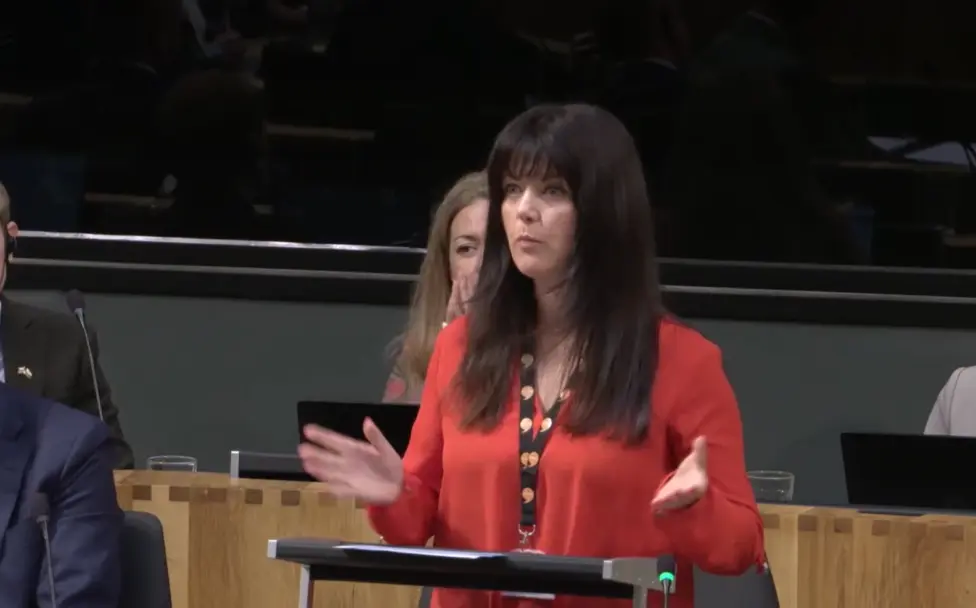
Reform’s deputy leader, Helen Jenner, said she recognised the importance of school support staff but opposed the creation of “yet another quango”.
She said: “We in Reform want to see quangos brought in-house to save taxpayers’ money and reduce the tax burden on Welsh people. We don’t want to see new ones created.
“While we have sympathy for the proposals for year-round pay for school support staff, there will, of course, be financial implications to implementing that policy and we would not like to see more money diverted from our schools.”
“Inconsistency”

Sam Rowlands, the Conservative education spokesperson, also weighed in on the debate discussing the “inconsistency” built into the current system.
He said: “Pay and conditions can vary from one local authority to another quite significantly, even for staff doing very much the same roles. That means recognition and reward for their work depends too heavily on where they happen to be employed, rather than the value of what they do.”
Mr Rowlands also hit out at Welsh Labour and Plaid Cymru, saying: “This is not a new problem. It’s been developed over 27 years of Labour in government here in Wales, propped up by Plaid Cymru, during which these structural issues in our education workforce were allowed to persist.”
Describing the system as “fragmented, under pressure and increasingly reliant on goodwill rather than proper structure”, Mr Rowlands said it is “not credible” for Plaid and Labour to “now present themselves as discovering these problems for the first time or to claim ownership of a solution only once they are no longer solely responsible for fixing it.”
“Backbone of our schools”

Education minister Anna Brychan began by recognising the “value and contribution” made by support staff in schools across Wales.
She said: “Teaching assistants, administrative officers, technicians, lunch-time supervisors, caretakers – roles that have been referred to by many of the contributors this afternoon – are the backbone of our schools across Wales, and I do recognise the crucial role of school support staff in Wales and very much appreciate their contribution to our education system as a whole. They are crucial and their contribution is priceless.”
Ms Brychan however then addressed the practicality of the motion.
The minister clarified the Welsh Government currently does not have the power to set the pay, terms and conditions for support staff, noting that this responsibility lies with local authorities or schools as the employers.
She acknowledged the benefits of introducing a statutory body for Welsh support staff, as is being introduced in England, but said this “would take time to establish” and said she is “eager” to see what can be done without legislation to make a difference more swiftly in the short term.
Concluding her response, the cabinet minister said: “I look forward to working with colleagues across this chamber to support and appreciate our school support staff.
“It is clear that there is support for and an understanding of their work across the chamber, and that is something valuable that we can build upon, and to help them give the best possible experience to our learners, as they already do, but also to provide an attractive career for them as individuals and as a profession too.”
The motion was agreed with 17 in favour, 74 abstentions, and none against.
Support quality, independent local news Help fund public-interest journalism in Caerphilly County Borough from just £1 a month and enjoy an advert-free website experience. Become a member today →